






Make Your Own Chains Part 1
Judy Larson shares how a surprising moment sparked a love for making chains by hand. In part one of this three part series, she explains why learning simple chain maille skills can add big style and value to your jewelry designs.
Even easy chains can make your pieces look more special and eye-catching!
Even easy chains can make your pieces look more special and eye-catching!
People are visual, auditory, or kinesthetic learners.
We learn by seeing something done, hearing or reading instructions, or hands-on practice.
Most of us use all three methods but excel in one. This determines if you watch videos, read tutorials, or take classes.
Do all three for the best results. Each method offers unique tips and tricks.
A: Videos suit visual and auditory learners.
Endless jewelry and chain-making videos exist online. Some are better than others, but each may share a unique tip. Those tips alone justify the time spent.
Keep a notepad and pencil handy. Freeze videos to note materials, tools, sizes, and gauges used.
Artists often use custom jump rings or modified tools.
B: Books excel for visual learners with step-by-step photos.
The best ones serve as constant references. Flipping through a book finds info faster than rewatching video series.
Most of my books live on the shelf for reference. They refresh rarely used skills or launch new projects.
Good chain jewelry books start with tools, supplies, and basics.
Tip: Build a library of books by different artists in your jewelry interests.
Each uses unique tools and materials. Over time, they answer your specific questions.
We learn by seeing something done, hearing or reading instructions, or hands-on practice.
Most of us use all three methods but excel in one. This determines if you watch videos, read tutorials, or take classes.
Do all three for the best results. Each method offers unique tips and tricks.
A: Videos suit visual and auditory learners.
Endless jewelry and chain-making videos exist online. Some are better than others, but each may share a unique tip. Those tips alone justify the time spent.
Keep a notepad and pencil handy. Freeze videos to note materials, tools, sizes, and gauges used.
Artists often use custom jump rings or modified tools.
B: Books excel for visual learners with step-by-step photos.
The best ones serve as constant references. Flipping through a book finds info faster than rewatching video series.
Most of my books live on the shelf for reference. They refresh rarely used skills or launch new projects.
Good chain jewelry books start with tools, supplies, and basics.
Tip: Build a library of books by different artists in your jewelry interests.
Each uses unique tools and materials. Over time, they answer your specific questions.
Chain making books start with easy chains and progress to complex designs.
When choosing books, seek tutorials with lots of step-by-step photos.
Color-coded or numbered jump rings in photos are very helpful.
If absent, photocopy and color the rings with pencils.
Some books detail math for jump ring sizes and gauges. This suits chain maille experts.
For most, just use the listed sizes to replicate projects. No math needed.
Printed directions include sizes 99.9% of the time.
Even without full chain maille, check Kylie Jones' Aspect Ratio Guides.
Print them as references. They show how wire gauge and ring size differ.
The guides simplify chain maille math clearly.
Designing Chain Maille with Aspect Ratio Click Here
Full Persian Weave Click Here
Half Persian Weave Click Here
Byzantine Weave Click Here
European 6 in 1 Weave: Click Here
When choosing books, seek tutorials with lots of step-by-step photos.
Color-coded or numbered jump rings in photos are very helpful.
If absent, photocopy and color the rings with pencils.
Some books detail math for jump ring sizes and gauges. This suits chain maille experts.
For most, just use the listed sizes to replicate projects. No math needed.
Printed directions include sizes 99.9% of the time.
Even without full chain maille, check Kylie Jones' Aspect Ratio Guides.
Print them as references. They show how wire gauge and ring size differ.
The guides simplify chain maille math clearly.
Designing Chain Maille with Aspect Ratio Click Here
Full Persian Weave Click Here
Half Persian Weave Click Here
Byzantine Weave Click Here
European 6 in 1 Weave: Click Here
Pro Tip: Tip: Make printed copies of your most often replicated chains. Mine are spiral bound to make them easier to look through. New ones are stuffed in until there are so many new ones falling out that the book needs to be taken to the office supply store to be re-bound.
C: In-person or live online classes let you ask questions.
They suit all learner types. Good teachers engage everyone.
Pre-class reading or videos give you a head start. You'll acquire skills faster.
Most classes provide reference materials or tutorials. Use them to refresh your memory later.
Working with diverse students reveals varied approaches.
See how they use different tools or the same ones uniquely.
They suit all learner types. Good teachers engage everyone.
Pre-class reading or videos give you a head start. You'll acquire skills faster.
Most classes provide reference materials or tutorials. Use them to refresh your memory later.
Working with diverse students reveals varied approaches.
See how they use different tools or the same ones uniquely.


Only two pliers start basic chain making: flat, chain, or bent nose.
For large rings, use non-marring flat nose soft jaw pliers.
Start cheap with base metal rings to dip into chain making.
No need to break the bank early.
Colored aluminum jump rings bring designs to life beautifully.
Silver Plated Copper Craft Wire Click Here
We all have preferences in jewelry making.
Don't feel bad if complicated chains don't excite you after trying them. Many reasons lead people away from chain maille.
Early on, we grip rings too tightly. This mars wire and causes hand, wrist, or arm pain.
First attempts won't be perfect.
Practice makes perfect.
For starters, buy jump rings instead of cutting them. Flush cutters often make messy, inaccurate cuts (see DOUBLE CHAIN section).
Begin with easy chains. Build to harder ones on basic skills.
Nothing beats muscle memory from repetition.
For large rings, use non-marring flat nose soft jaw pliers.
Start cheap with base metal rings to dip into chain making.
No need to break the bank early.
Colored aluminum jump rings bring designs to life beautifully.
Silver Plated Copper Craft Wire Click Here
We all have preferences in jewelry making.
Don't feel bad if complicated chains don't excite you after trying them. Many reasons lead people away from chain maille.
Early on, we grip rings too tightly. This mars wire and causes hand, wrist, or arm pain.
First attempts won't be perfect.
Practice makes perfect.
For starters, buy jump rings instead of cutting them. Flush cutters often make messy, inaccurate cuts (see DOUBLE CHAIN section).
Begin with easy chains. Build to harder ones on basic skills.
Nothing beats muscle memory from repetition.
Jump rings form the foundation of beautiful chain jewelry.
Master opening and closing them well first.
Most chain maille designs rely on unsoldered rings.
This skill is essential.
Step by step Wire Basics - Opening and Closing Jump Rings Click Here
Master opening and closing them well first.
Most chain maille designs rely on unsoldered rings.
This skill is essential.
Step by step Wire Basics - Opening and Closing Jump Rings Click Here
Strategies for Starting a Chain Mail Weave Marilyn Gardiner is a great tutorial on all those little things you wish you knew before you started your first chain maille project.
Find it here: Click Here
Find it here: Click Here
SINGLE CABLE CHAIN
Once comfortable opening and closing jump rings, start with Single Cable Chain.
Connect one ring to another in a long chain.
It's the simplest.
No matter the size or gauge, unsoldered Single Cable Chain is weakest.
Aligned seams pull apart easily with a tug.
I made one with dead soft rings, tumbled it, then it broke. Now those rings serve as faux eyelets on earrings.
Tip: Tumbling in steel shot hardens only the outer layer.
Dead soft rings stay mostly soft. I bought soldered fine chain (C8-266U) instead.
Two Single Cable Chains side by side to a closure are stronger.
Try the Jump Ring Fringe Bracelet.
Attach extra rings to base chains for fringe. Swap some for twisted square wire rings. Find the tutorial here:
Two Single Cable Chains Click Here
Once comfortable opening and closing jump rings, start with Single Cable Chain.
Connect one ring to another in a long chain.
It's the simplest.
No matter the size or gauge, unsoldered Single Cable Chain is weakest.
Aligned seams pull apart easily with a tug.
I made one with dead soft rings, tumbled it, then it broke. Now those rings serve as faux eyelets on earrings.
Tip: Tumbling in steel shot hardens only the outer layer.
Dead soft rings stay mostly soft. I bought soldered fine chain (C8-266U) instead.
Two Single Cable Chains side by side to a closure are stronger.
Try the Jump Ring Fringe Bracelet.
Attach extra rings to base chains for fringe. Swap some for twisted square wire rings. Find the tutorial here:
Two Single Cable Chains Click Here
Tutorials use ID (interior diameter) or OD (outer diameter) for jump rings.
Most chain maille books list by ID.
Check the materials list carefully before making or ordering. Avoid mistakes.
Most designs use open, unsoldered jump rings.
Closed rings add stability and strength sometimes.
Single rings pull open easily. Buy soldered finished chain for extenders.
Purchased rings are full or half hard temper.
They resist opening if caught.
Use full hard wire for homemade rings, especially unsoldered ones.
Read: Wire Temper and Jump Rings article.
Wire Temper and Jump Rings Click Here
Find the notes for making this bracelet with heavy gauge rings here Click Here
Bezelled Blue Onyx faceted gemstone Click Here
Most chain maille books list by ID.
Check the materials list carefully before making or ordering. Avoid mistakes.
Most designs use open, unsoldered jump rings.
Closed rings add stability and strength sometimes.
Single rings pull open easily. Buy soldered finished chain for extenders.
Purchased rings are full or half hard temper.
They resist opening if caught.
Use full hard wire for homemade rings, especially unsoldered ones.
Read: Wire Temper and Jump Rings article.
Wire Temper and Jump Rings Click Here
Find the notes for making this bracelet with heavy gauge rings here Click Here
Bezelled Blue Onyx faceted gemstone Click Here
Most chain maille designs use open, unsoldered jump rings.
Closed rings add stability and strength in some cases.
Single rings pull open easily.
Buy finished chain with soldered rings for bracelet and necklace extenders.
Don't solder all rings closed.
The Blue Ice bracelet below saved the wearer's arm in an accident.
Read the article here:The Blue Ice bracelet Click Here
Closed rings add stability and strength in some cases.
Single rings pull open easily.
Buy finished chain with soldered rings for bracelet and necklace extenders.
Don't solder all rings closed.
The Blue Ice bracelet below saved the wearer's arm in an accident.
Read the article here:The Blue Ice bracelet Click Here


Save twist tie wraps from wire coils.
They're invaluable for starting chains. They give fingers more to hold than tiny jump rings.
This chain starts with a twist tie or K3-111 12x4mm sterling silver lobster claw, plus 18 gauge 3.5mm ID jump rings.
Solder all attached rings on new clasps closed.
They're often small, fine gauge, and pull open easily.
Cut them later if needed, but avoid mid-project soldering, cleaning, and polishing.
They're invaluable for starting chains. They give fingers more to hold than tiny jump rings.
This chain starts with a twist tie or K3-111 12x4mm sterling silver lobster claw, plus 18 gauge 3.5mm ID jump rings.
Solder all attached rings on new clasps closed.
They're often small, fine gauge, and pull open easily.
Cut them later if needed, but avoid mid-project soldering, cleaning, and polishing.


DOUBLE CABLE CHAIN
Build a stronger cable chain: Double Cable Chain.
Connect two rings to two rings, repeating.
Hand-cut rings rarely close properly. Flush cutters leave imperfect, non-flat cuts.
This weakens links and looks unprofessional.
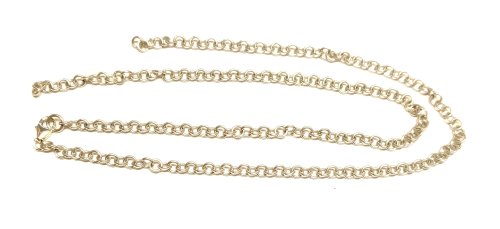
See the silver craft wire chain example.
Copper chain with machine-cut rings closes flush. Hand-cut openings snag clothes and scratch skin.
Build a stronger cable chain: Double Cable Chain.
Connect two rings to two rings, repeating.
Hand-cut rings rarely close properly. Flush cutters leave imperfect, non-flat cuts.
This weakens links and looks unprofessional.
See the silver craft wire chain example.
Copper chain with machine-cut rings closes flush. Hand-cut openings snag clothes and scratch skin.
Find the tutorial for the simply elegant Garnet 2-in-2 Chain Maille Necklace by Kylie Jones here:
Garnet 2-in-2 Chain Maille Necklace Click Here
Garnet 2-in-2 Chain Maille Necklace Click Here
Romanov Chainmaille Pendant Click Here
Rubber Meets Metal bracelet by Nancy Chase reimagines the double cable.
It's fun and simple.
Check hardware stores for rubber or silicone O-rings.
Exact sizes may vary, but adjust aluminum jump rings easily to fit.
Rubber Meets Metal Click Here
It's fun and simple.
Check hardware stores for rubber or silicone O-rings.
Exact sizes may vary, but adjust aluminum jump rings easily to fit.
Rubber Meets Metal Click Here


TRY A TRIPLE CABLE CHAIN
Mix plain round and twisted square wire jump rings.
They add sparkle and interest to plain bracelet chains.
This heavier chain suits guys well.
Accidentally Learning Something New Click Here
Mix plain round and twisted square wire jump rings.
They add sparkle and interest to plain bracelet chains.
This heavier chain suits guys well.
Accidentally Learning Something New Click Here

For more of a challenge than just twisting square wire, check out
Twisted Wire Jump Rings Click Here
Twisted Wire Jump Rings Click Here

Rolo Chain (also Belcher Chain) is a Single Cable Chain.
Use half round or oval wire for round (first photo) or oval (second photo) rings.
Half round wire jump rings get expensive fast.
They're not always easy to find.
Make your own to save money.
Try affordable options like silver/gold plated copper, enameled copper/bronze, or base metal wires.
Use half round or oval wire for round (first photo) or oval (second photo) rings.
Half round wire jump rings get expensive fast.
They're not always easy to find.
Make your own to save money.
Try affordable options like silver/gold plated copper, enameled copper/bronze, or base metal wires.
Simple cable chains shine as design stars.
See the examples in this article.
Change jump ring sizes, colors, or textures.
Make any design uniquely yours.
See the examples in this article.
Change jump ring sizes, colors, or textures.
Make any design uniquely yours.


Materials

Wire - Wide variety of gauges and metals
Tools

The Quad Jump Ring Former
DUR-1312
- DUR-1312
- Lesson Quantity: 1.00 pieces
- Purchase Quantity: 1.00 each
- Price: $388.00
- Gold Club Price: $291.00

WireJewelry Pro-Series Single Barrel Tumbler, Jewelry and Metal Polishing Kit, Includes 1 Pound of Jewelers Mix Shot and 8 Ounces of Shinebrite Burnishing Compound
G25-1-KITSS
- G25-1-KITSS
- Lesson Quantity: 1.00 pieces
- Purchase Quantity: 1.00 each
- Price: $173.27
- Gold Club Price: $129.95

WireJewelry - Ultimate Wire-Pliers Jewelry Pliers with Case, Set of 5
G15-20
- G15-20
- Lesson Quantity: 1.00 pieces
- Purchase Quantity: 1.00 each
- Price: $170.72
- Gold Club Price: $128.04

Flat Nose Wire Pliers
G2-506
- G2-506
- Lesson Quantity: 1.00 pieces
- Purchase Quantity: 1.00 each
- Price: $32.95
- Gold Club Price: $24.71

20 X 15 Inch Padded Work Mat
MAT-620.00
- MAT-620.00
- Lesson Quantity: 1.00 pieces
- Purchase Quantity: 1.00 each
- Price: $14.95
- Gold Club Price: $11.21
Supply Detail
loading...
Change Metal:
This Article requires:
Purchase quantity:
Price: $
Gold Club Price: $
Purchase quantity:
Price: $
Gold Club Price: $
- Category: Teaching
- Technique(s): Chain Making, Teaching, General Education, Chain Maille

Judy Larson
Other Articles by Judy Larson
 What is Druzy
 Coiled Wire Jewelry Series Part 1 - Everything New is Old
 Where do you create
 Soldering on Copper
 Charting Your Creations
 Design Process with 3 Earrings
 All About Rolling Mills
 How to Use Disc Cutters to Make Metal Washers
 Disc Cutter Basics and How to Make Metal Washers
 I Am Not a Hoarder
 The Beauty of Druzy
 Design Process with 3 Different Earrings
 Think Outside the Box - Alternative Metal Texturing
 Fall Leaves for Your Designs
 Cholula "Folk Art" Charms
 Lemons to Lemonade
 Why You Should Take a Class
 Bead, Shell, and Rock Cabochons
 What Tools Do I Need for Wirework and Bead Stringing - Start With The Basics
 Choosing Pliers
 Saving, Storing, Using Tutorials
 Flop to Flip
 The Story of Turquoise
 Non Marring Tools
 Using Lower Quality Beads
 Differences in Gold Plating
 Inventorying Your Supplies
 Engineering the Multi-chain Necklace
 Benefits of Extender Chains
 My Most Often Used Embellishments
 Sliding Gauges and Calipers
 Wire and Sheet Gauge Measuring Tool
 Silver Plated Copper Craft Wire
 Jewelry from Other Cultures
 Conversation Starters
 Well, That Didn't Work, Now What
 Water Casting for the Weekend Jeweler
 A Few Thoughts on Multi-Strand Beading Wires
 How to Downsize Your Earring Projects Without Losing Style
 Celebration Jewelry
 Moonstone- A Flash of Light
 A Short History of Charms and Charm Bracelets
 Easy Asymmetry

The premier place for all your jewelry making needs. The best in wire, tools, cabochons, gemstone beads and more. As well as a superior resource for educational support to help build your jewelry making skills and techniques.
Connect With Us

® 2007 - 2026 Wirejewelry.com Powered by ClaimTheWeb Cart